Child Therapy for Social Skills Development in San Ramon, CA
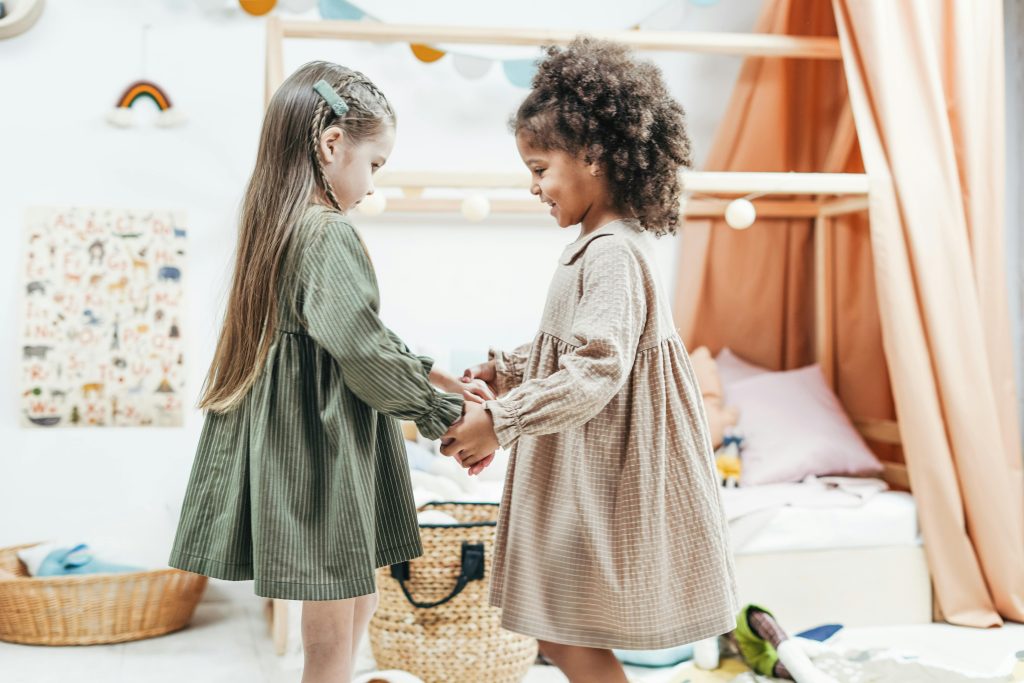
Some children walk into a room and immediately find their footing. Others hang back, watching from the edges, unsure how to get in. For parents, it can be painful to watch a child who wants to connect with other kids but doesn’t quite know how.
Social difficulty in children rarely comes from a lack of caring. More often it reflects a gap in the tools a child has for reading social situations, managing their responses, and building the kind of give-and-take that friendships require. Some children are naturally more reserved. Others have experienced social hurt that made them pull back. And for many, anxiety, emotional sensitivity, or behavioral patterns have made the social world feel unpredictable and hard to navigate.
At Treehouse Family Counseling Services, child therapy for social skills development addresses the relational patterns underneath the surface, not just the behaviors parents and teachers can see.
Signs Your Child May Be Struggling Socially
Social difficulty doesn’t always look the same. It can show up as:
- Difficulty entering a group or joining a game already in progress
- Trouble reading other children’s cues, tone, or body language
- Friendships that start but don’t seem to stick
- Avoiding social situations, playdates, or group activities
- Conflict with peers that repeats across different settings
- Withdrawing after a social hurt and not knowing how to repair it
- Being described by teachers as a loner, bossy, or disruptive in group settings
These patterns can take a toll on a child’s confidence over time. When social struggles persist across settings, professional support can make a meaningful difference.
How Therapy Supports Social Development
Social skills are not just learned by being around other children. For many kids, the relational capacity to connect, repair, and belong develops through supported exploration in a safe environment.
In therapy, children practice reading situations, expressing themselves, and responding to others in ways that feel manageable rather than overwhelming. For children who struggle because of anxiety, play therapy for childhood anxiety helps address the fear that often sits underneath social avoidance, making it hard to take the small relational risks that friendships require.
Children who become easily flooded in social situations often need help with the emotional layer first. Play therapy for emotional regulation builds the internal capacity to stay grounded when things get hard in peer interactions, so that a disagreement or a misread moment doesn’t spiral into withdrawal or conflict.
For some children, social difficulty is one part of a broader picture that includes behavioral challenges at school or in group settings. Play therapy for behavioral challenges addresses the patterns that can make peer relationships harder, giving children more tools for navigating conflict and cooperation.
When social anxiety and avoidance have led to school-related difficulties, there is often meaningful overlap with child therapy for school refusal, particularly for children whose reluctance to attend is driven by fear of peer rejection or social failure.
For older children moving into adolescence, social challenges often intensify. Teen therapy for anxiety supports the relational confidence that can erode when social comparison and peer pressure become more acute.
Our Approach at Treehouse
At Treehouse Family Counseling Services, we believe that social development is relational at its core. Children learn how to be with others by first experiencing what it feels like to be understood, seen, and safe.
Our clinicians use play-based, expressive approaches, including sand tray, puppets, storytelling, and creative tools that allow children to explore relational dynamics in a space that doesn’t feel threatening. For younger children, especially, social learning happens naturally through play. The therapy room becomes a place where a child can experiment with connection, work through relational fears, and develop skills they can carry into the wider world.
Treatment plans are individualized and developed in close collaboration with parents. We keep families informed and actively involved, because what happens between sessions matters as much as what happens in them.
Mary Ruth Cross, LMFT, RPT-S, brings over 30 years of experience and holds credentials as a Registered Play Therapist Supervisor, one of the highest designations in the field. All Child and Teen Therapy at Treehouse is grounded in attachment theory, family systems thinking, and a genuine belief that every child has the capacity to grow.
Frequently Asked Questions
Can therapy help a child with social skills?
Yes. Therapy is one of the most effective ways to support children who struggle socially, particularly when the difficulty is rooted in anxiety, emotional dysregulation, or early relational experiences. A therapist works with the child on the underlying patterns driving the social struggle, not just surface behaviors, which tends to produce more lasting and meaningful change.
At what age should I be concerned about my child’s social development?
There is no single age threshold, but persistent difficulty connecting with peers across multiple settings, especially when a child seems to want connection but can’t find their way in, is worth exploring. Early intervention tends to produce faster results, and addressing social challenges before they become entrenched in a child’s self-concept matters.
Does my child need a diagnosis to receive social skills therapy?
No. Many children who benefit from therapy around social development do not carry a formal diagnosis. If a child is struggling relationally and that struggle is affecting their well-being, confidence, or daily life, that is sufficient reason to seek support.
How do parents stay involved in this kind of therapy?
Parents are an active part of the process. We meet with parents to share progress, discuss what we are seeing, and provide guidance on how to support the work at home. Children make the most progress when the relational environment around them is consistent and supportive.
Taking the First Step
You do not need to have everything figured out before reaching out. If something feels off for your child socially, that instinct as a parent is worth following.
Contact Treehouse Family Counseling Services in San Ramon
Treehouse Family Counseling Services | 8 Crow Canyon Ct #207, San Ramon, CA 94583 | (925) 820-8447

