What to Expect in Child and Teen Therapy in San Ramon
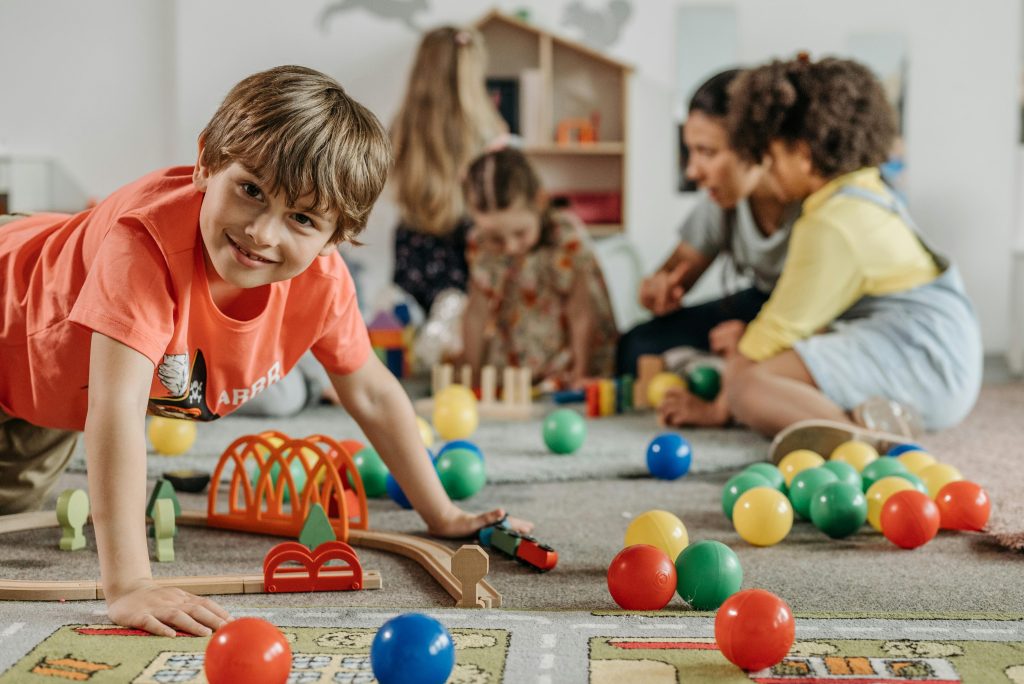
If you are researching therapy for your child or teen and are not sure what actually happens in a session, that is completely normal. Most parents do not know what to picture, and the uncertainty can make it harder to take the first step.
At Treehouse Family Counseling Services, a group practice in San Ramon, California, child and teen therapy is built around one foundational idea: a child who feels safe will engage. Everything about how sessions are structured follows from that.
What Happens in the First Session
The first session in Child and Teen Therapy at Treehouse is focused on connection, not evaluation. For younger children, the playroom itself does a lot of the settling. Sand tray materials, puppets, art supplies, and other expressive tools are present from the start, giving children a natural way to orient without being asked to explain themselves.
For teenagers, the first session involves more conversation, but the same principle applies. The therapist’s first priority is to become someone the teen is willing to return to. Parents are included in a portion of the initial session to share context, ask questions, and understand how communication will work throughout treatment.
Nothing is expected of your child except showing up.
Why Play Is the Therapeutic Medium for Children
A question parents ask often is whether play therapy is real therapy or simply supervised play. The distinction matters, because it shapes how you understand what your child is actually doing in sessions.
Play is the primary language of childhood. When a child moves figures through a sand tray, uses a puppet to voice something that feels too large to say directly, or builds a scene in the playroom, they are not passing time. They are processing experiences, emotions, and relationships through the medium that comes most naturally to them.
The therapeutic relationship provides the safety for that processing to happen. The clinician’s training determines what to do with what emerges.
For children whose anxiety is driving avoidance, withdrawal, or physical complaints, play therapy for childhood anxiety uses this same medium to bring feared experiences into view at a pace the child can tolerate. For children who become easily flooded emotionally, play therapy for emotional regulation builds the internal capacity to stay grounded when peer conflict, transitions, or disappointment arise. When behavioral patterns are part of the picture, play therapy for behavioral challenges addresses the underlying drivers rather than the surface expressions alone.
What Progress Actually Looks Like
Progress in play-based therapy is not always immediately visible to parents, and that is worth naming directly. A child who appears to be playing quietly in sessions may be doing significant internal work. The process is not linear, and early sessions often look more like orientation than intervention.
Most families begin to notice meaningful shifts within the first two to three months of consistent weekly sessions. For children whose anxiety has led to Child Therapy for School Refusal, progress often shows up first at home in the mornings before it becomes visible at school. For children working on relationships with peers, gains in Child Therapy for Social Skills Development tend to emerge gradually across multiple settings.
For teenagers, progress often looks like reduced avoidance, more flexible thinking, and a greater willingness to tolerate uncertainty. Teen Therapy for Anxiety at Treehouse is calibrated specifically for adolescent development, not a scaled-up version of child therapy.
Frequently Asked Questions
What happens in a child’s first therapy session?
The first session is focused on building connection, not conducting an assessment. The therapist spends time getting to know your child through play-based tools or conversation depending on their age and comfort level. Parents are typically included in part of the session to provide context and establish how communication will work going forward. Nothing is expected of your child except showing up.
Does my child have to talk about their feelings in therapy?
No, and for younger children especially, therapy does not depend on verbal disclosure. Play, sand tray, puppets, and expressive tools allow children to process and communicate without needing to articulate what is wrong. Even with older children and teens, a skilled therapist does not push for disclosure before trust is established.
How long does child and teen therapy usually take?
There is no universal timeline. Many families notice meaningful shifts within two to three months of weekly sessions. Some children complete a focused course of work in under six months. Others benefit from longer-term support, particularly when anxiety, attachment concerns, or behavioral patterns have been present for some time.
Ready When You Are
You do not need to have everything figured out before reaching out. A first conversation is just a first conversation.
Contact Treehouse Family Counseling Services in San Ramon
Treehouse Family Counseling Services | 8 Crow Canyon Ct #207, San Ramon, CA 94583 | (925) 820-8447

